Milburn Review: YE's response

Nearly one million young people are currently not in education, employment or training. Reaching the Milburn Review’s ambition to reduce the NEET rate to around 5% by 2036 will require more than finding young people opportunities at 18; it means changing how we prepare and support them much earlier.
At Young Enterprise, much of Alan Milburn’s “new settlement for the next generation” closely aligns with what we have long championed: practical work readiness, early intervention, employer engagement and enterprise education. But we can go further.

Youth Entrepreneurship
We particularly welcome the Review’s recognition of entrepreneurship and self-employment as genuine routes into economic participation. Entrepreneurship should be a fourth pathway for young people, alongside education, employment and training. However, opportunity starts with education, financial capability, mentoring and networks of support.
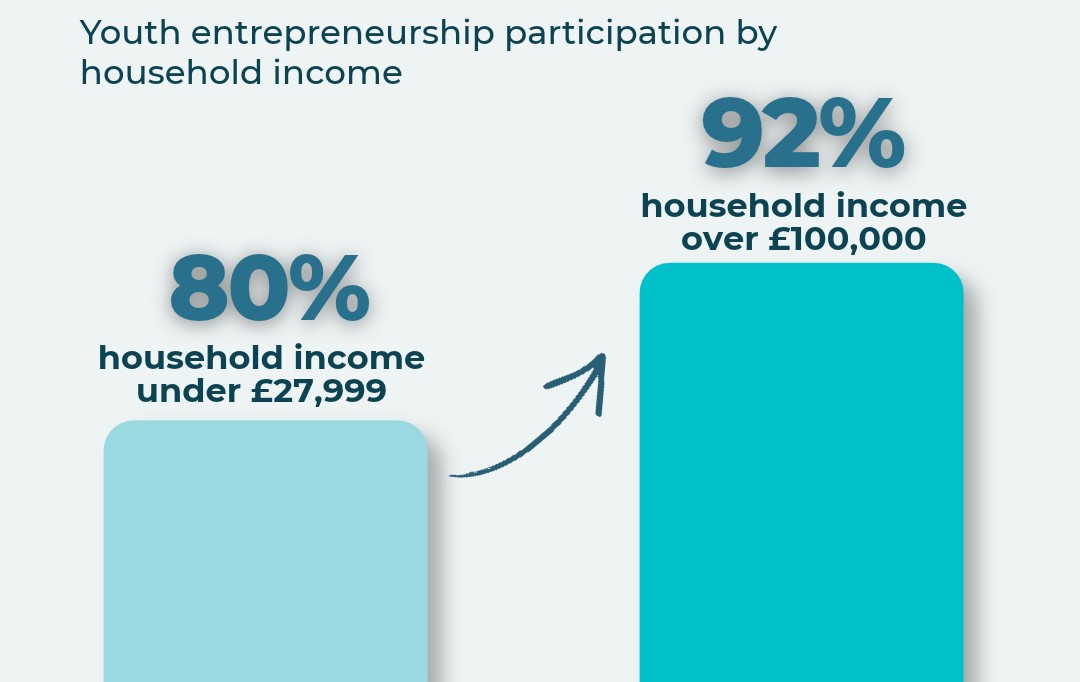
The UK already has an enterprising generation. According to our EntrepreYOUTH research, 96% of 16 to 24-year-olds show interest in doing something entrepreneurial in their future, but opportunity to progress remains unequal. Entrepreneurial participation rises from 80% among young people in households earning under £27,999 to 92% among those over £100,000, while money, fear of failure and financial insecurity remain significant barriers.
Entrepreneurship will not be the right pathway for every young person, but for some, it can provide a genuine route into fulfilling work. That opportunity should be shaped by ambition and potential, not family circumstances. Practical enterprise education can provide the foundation, while giving every young person the skills, confidence and mindset for the wider world of work.
Prevention starts young, but what does it look like?
The Review’s proposals for statutory work experience and a new Ready-for-Work Standard recognise that qualifications matter, but young people also need practical experience, confidence and transferable skills. Enterprise education provides exactly that hands-on experience: in Company and Team Programme, young people are marketing directors and finance managers, making business decisions and handling real money.
Following the programmes
- 84% of young people understood their strengths and areas for development.
- 89% felt inspired about starting a career that motivates and interests them.
- Educators reported that 100% gained teamwork and confidence skills and 87% became more confident about the world of work.
In 2025/26, 652 business volunteers supported these programmes, bringing real business experience, networks and mentoring directly into education.

As the first rungs of the old career ladder have weakened, opportunities to develop these skills must come into the classroom.
Practical enterprise and financial education programmes like Young Enterprise can help bridge this gap, supporting seven of the eight Gatsby Benchmarks and connecting practical learning with careers and the world of work. This aligns with the Maple Review’s recommended Business Skills Guarantee, providing an established route to build business, employability and transferable skills.
The risks of becoming NEET emerge long before 16. The Review rightly recommends identifying young people at risk earlier, but identification must lead to meaningful support and proven interventions before disengagement becomes entrenched.
At Denbigh High School, 13 boys at risk of permanent exclusion took part in Company Programme. Head Teacher Donna Neely-Hayes said that “It has been a joy to witness how a group of pupils, who were at risk of becoming increasingly disengaged with school, found a new avenue for creativity and personal development”.
Ten of the students subsequently improved their attendance and eight their attitude to learning.
This promising early evidence deserves further investigation, so that when young people are identified as at risk of becoming NEET, schools have evidence-based interventions they can draw on, including enterprise education.

Turning ambition into action:
The Milburn Review gives us an opportunity not simply to respond to the NEET crisis, but to change the conditions that create it. Young Enterprise stands ready to work with Government on its response to this review. As part of the pathway to reducing the NEET rate, we want to see an independently evaluated NEET-prevention pilot, help shape a Ready-for-Work Standard that recognises high-quality enterprise experience, and ensure practical enterprise and financial education gives every young person the confidence, skills and connections to benefit from the opportunities ahead.



Stay connected with YE